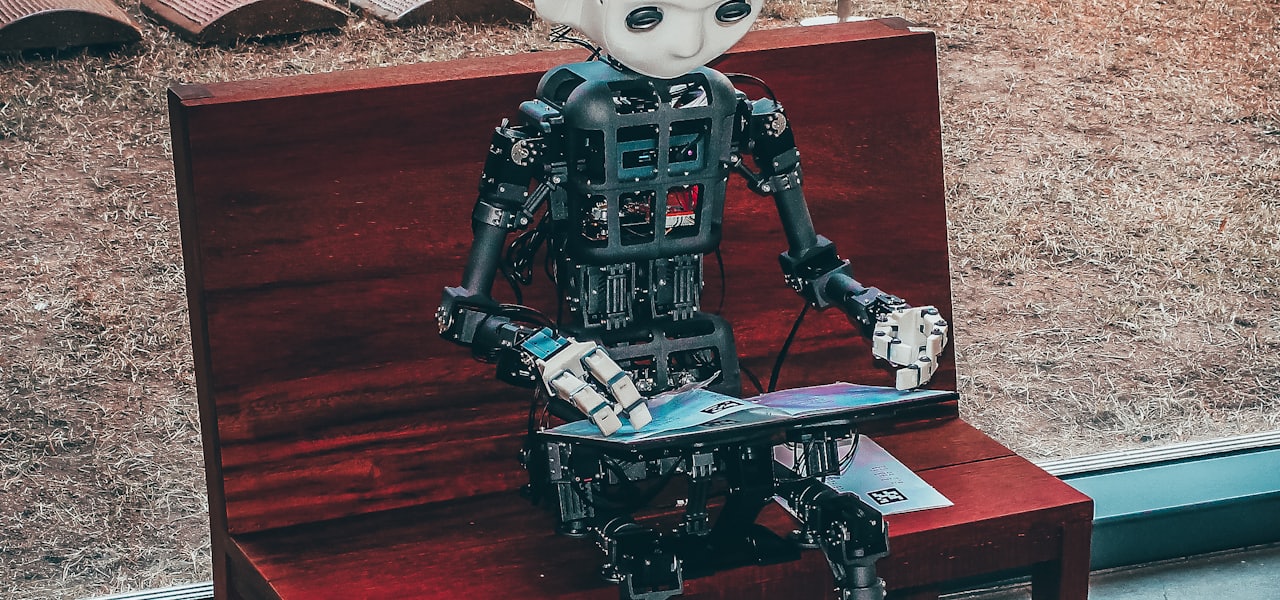
A reasoning model, also known as a reasoning language model (RLM) or large reasoning model (LRM), is a type of large language model (LLM) that has been specifically trained to solve complex tasks requiring multiple steps of logical reasoning. These models demonstrate superior performance on logic, mathematics, and programming tasks compared to standard LLMs. They possess the ability to revisit and revise earlier reasoning steps and utilize additional computation during inference as a method to scale performance, complementing traditional scaling approaches based on training data size, model parameters, and training compute. == Overview == Unlike traditional language models that generate responses immediately, reasoning models allocate additional compute, or thinking, time before producing an answer to solve multi-step problems. OpenAI introduced this terminology in September 2024 when it released the o1 series, describing the models as designed to "spend more time thinking" before responding. The company framed o1 as a reset in model naming that targets complex tasks in science, coding, and mathematics, and it contrasted o1's performance with GPT-4o on benchmarks such as AIME and Codeforces. Independent reporting the same week summarized the launch and highlighted OpenAI's claim that o1 automates chain-of-thought style reasoning to achieve large gains on difficult exams. In operation, reasoning models generate internal chains of intermediate steps, then select and refine a final answer. OpenAI reported that o1's accuracy improves as the model is given more reinforcement learning during training and more test-time compute at inference. The company initially chose to hide raw chains and instead return a model-written summary, stating that it "decided not to show" the underlying thoughts so researchers could monitor them without exposing unaligned content to end users. Commercial deployments document separate "reasoning tokens" that meter hidden thinking and a control for "reasoning effort" that tunes how much compute the model uses. These features make the models slower than ordinary chat systems while enabling stronger performance on difficult problems. == History == The research trajectory toward reasoning models combined advances in supervision, prompting, and search-style inference. Early alignment work on reinforcement learning from human feedback showed that models can be fine-tuned to follow instructions with "human feedback" and preference-based rewards. In 2022, Google Research scientists Jason Wei and Denny Zhou showed that chain-of-thought prompting "significantly improves the ability" of large models on complex reasoning tasks. Input → Step 1 → Step 2 → ⋯ → Step n ⏟ Reasoning chain → Answer {\displaystyle {\text{Input}}\rightarrow \underbrace {{\text{Step}}_{1}\rightarrow {\text{Step}}_{2}\rightarrow \cdots \rightarrow {\text{Step}}_{n}} _{\text{Reasoning chain}}\rightarrow {\text{Answer}}} A companion result demonstrated that the simple instruction "Let's think step by step" can elicit zero-shot reasoning. Follow-up work introduced self-consistency decoding, which "boosts the performance" of chain-of-thought by sampling diverse solution paths and choosing the consensus, and tool-augmented methods such as ReAct, a portmanteau of Reason and Act, that prompt models to "generate both reasoning traces" and actions. Research then generalized chain-of-thought into search over multiple candidate plans. The Tree-of-Thoughts framework from Princeton computer scientist Shunyu Yao proposes that models "perform deliberate decision making" by exploring and backtracking over a tree of intermediate thoughts. OpenAI's reported breakthrough focused on supervising reasoning processes rather than only outcomes, with Lightman et al.'s "Let's Verify Step by Step" reporting that rewarding each correct step "significantly outperforms outcome supervision" on challenging math problems and improves interpretability by aligning the chain-of-thought with human judgment. OpenAI's o1 announcement ties these strands together with a large-scale reinforcement learning algorithm that trains the model to refine its own chain of thought, and it reports that accuracy rises with more training compute and more time spent thinking at inference. Together, these developments define the core of reasoning models. They use supervision signals that evaluate the quality of intermediate steps, they exploit inference-time exploration such as consensus or tree search, and they expose controls for how much internal thinking compute to allocate. OpenAI's o1 family made this approach available at scale in September 2024 and popularized the label "reasoning model" for LLMs that deliberately think before they answer. The development of reasoning models illustrates Richard S. Sutton's "bitter lesson" that scaling compute typically outperforms methods based on human-designed insights. This principle was demonstrated by researchers at the Generative AI Research Lab (GAIR), who initially attempted to replicate o1's capabilities using sophisticated methods including tree search and reinforcement learning in late 2024. Their findings, published in the "o1 Replication Journey" series, revealed that knowledge distillation, a comparatively straightforward technique that trains a smaller model to mimic o1's outputs, produced unexpectedly strong performance. This outcome illustrated how direct scaling approaches can, at times, outperform more complex engineering solutions. === Drawbacks === Reasoning models require significantly more computational resources during inference compared to non-reasoning models. Research on the American Invitational Mathematics Examination (AIME) benchmark found that reasoning models were 10 to 74 times more expensive to operate than their non-reasoning counterparts. The extended inference time is attributed to the detailed, step-by-step reasoning outputs that these models generate, which are typically much longer than responses from standard large language models that provide direct answers without showing their reasoning process. One researcher in early 2025 argued that these models may face potential additional denial-of-service concerns with "overthinking attacks." === Releases === ==== 2024 ==== In September 2024, OpenAI released o1-preview, a large language model with enhanced reasoning capabilities. The full version, o1, was released in December 2024. OpenAI initially shared preliminary results on its successor model, o3, in December 2024, with the full o3 model becoming available in 2025. Alibaba released reasoning versions of its Qwen large language models in November 2024. In December 2024, the company introduced QvQ-72B-Preview, an experimental visual reasoning model. In December 2024, Google introduced Deep Research in Gemini, a feature designed to conduct multi-step research tasks. On December 16, 2024, researchers demonstrated that by scaling test-time compute, a relatively small Llama 3B model could outperform a much larger Llama 70B model on challenging reasoning tasks. This experiment suggested that improved inference strategies can unlock reasoning capabilities even in smaller models. ==== 2025 ==== In January 2025, DeepSeek released R1, a reasoning model that achieved performance comparable to OpenAI's o1 at significantly lower computational cost. The release demonstrated the effectiveness of Group Relative Policy Optimization (GRPO), a reinforcement learning technique used to train the model. On January 25, 2025, DeepSeek enhanced R1 with web search capabilities, allowing the model to retrieve information from the internet while performing reasoning tasks. Research during this period further validated the effectiveness of knowledge distillation for creating reasoning models. The s1-32B model achieved strong performance through budget forcing and scaling methods, reinforcing findings that simpler training approaches can be highly effective for reasoning capabilities. On February 2, 2025, OpenAI released Deep Research, a feature powered by their o3 model that enables users to conduct comprehensive research tasks. The system generates detailed reports by automatically gathering and synthesizing information from multiple web sources. OpenAI called GPT-4.5 its "last non-chain-of-thought model", and implemented with GPT-5 a router model that selects a model based on the difficulty of the task. ==== 2026 ==== In January 2026, Moonshot AI released Kimi K2.5, an open-source 1 trillion parameter MoE model with 32 billion active parameters. It uses an “Agent Swarm” system that dynamically decomposes tasks into sub-agents for reasoning and execution, enabling more scalable multi-step problem solving than a single sequential reasoning chain. == Training == Reasoning models follow the familiar large-scale pretraining used for frontier language models, then diverge in the post-training and optimization. OpenAI reports that o1 is trained with a large-
Distinguishable interfaces
Distinguishable interfaces use computer graphic principles to automatically generate easily distinguishable appearance for computer data. Although the desktop metaphor revolutionized user interfaces, there is evidence that a spatial layout alone does little to help in locating files and other data; distinguishable appearance is also required. Studies have shown that average users have considerable difficulty finding files on their personal computers, even ones that they created the same day. Search engines do not always help, since it has been found that users often know of the existence of a file without being able to specify relevant search terms. On the contrary, people appear to incrementally search for files using some form of context. Recently researchers and web developers have argued that the problem is the lack of distinguishable appearance: in the traditional computer interface most objects and locations appear identical. This problem rarely occurs in the real world, where both objects and locations generally have easily distinguishable appearance. Discriminability was one of the recommendations in the ISO 9241-12 recommendation on presentation of information on visual displays (part of the overall report on Ergonomics of Human System Interaction), however it was assumed in that report that this would be achieved by manual design of graphical symbols. == VisualIDs, semanticons, and identicons == The mass availability of computer graphics supported the introduction of approaches that make better use of the brain's "visual hardware", by providing individual files and other abstract data with distinguishable appearance. This idea initially appeared in strictly academic VisualIDs and Semanticons works, but the web community has explored and rapidly adopted similar ideas, such as the Identicon. The VisualIDs project automatically generated icons for files or other data based on a hash of the data identifier, so the icons had no relation to the content or meaning of the data. It was argued not only that generating meaningful icons is unnecessary (their user study showed rapid learning of the arbitrary icons), but also that basing icons on content is actually incorrect ("contrasting visualization with visual identifiers"). The Semanticons project developed by Setlur et al. demonstrated an algorithm to create icons that reflect the content of files. In this work the name, location and content of a file are parsed and used to retrieve related image(s) from an image database. These are then processed using a Non-photorealistic rendering technique in order to generate graphical icons. Developer Don Park introduced the identicon library for making a visual icon from a hash of a data identifier. This initial public implementation has spawned a large number of implementations for various environments. In particular, identicons are now being used as default visual user identifiers (avatars) for several widely used systems. They are also used as a complement to Gravatars, which are pre-existing avatar images created or chosen by users, instead of automatically generated images. (see #External links). == Current research == While current web practice has followed the semantics-free approach of VisualIDs, recent research has followed the semantics-based approach of Semanticons. Examples include using data mining principles to automatically create "intelligent icons" that reflect the contents of files and creating icons for music files that reflect audio characteristics or affective content.
Soft independent modelling of class analogies
Soft independent modelling by class analogy (SIMCA) is a statistical method for supervised classification of data. The method requires a training data set consisting of samples (or objects) with a set of attributes and their class membership. The term soft refers to the fact the classifier can identify samples as belonging to multiple classes and not necessarily producing a classification of samples into non-overlapping classes. == Method == In order to build the classification models, the samples belonging to each class need to be analysed using principal component analysis (PCA); only the significant components are retained. For a given class, the resulting model then describes either a line (for one Principal Component or PC), plane (for two PCs) or hyper-plane (for more than two PCs). For each modelled class, the mean orthogonal distance of training data samples from the line, plane, or hyper-plane (calculated as the residual standard deviation) is used to determine a critical distance for classification. This critical distance is based on the F-distribution and is usually calculated using 95% or 99% confidence intervals. New observations are projected into each PC model and the residual distances calculated. An observation is assigned to the model class when its residual distance from the model is below the statistical limit for the class. The observation may be found to belong to multiple classes and a measure of goodness of the model can be found from the number of cases where the observations are classified into multiple classes. The classification efficiency is usually indicated by Receiver operating characteristics. In the original SIMCA method, the ends of the hyper-plane of each class are closed off by setting statistical control limits along the retained principal components axes (i.e., score value between plus and minus 0.5 times score standard deviation). More recent adaptations of the SIMCA method close off the hyper-plane by construction of ellipsoids (e.g. Hotelling's T2 or Mahalanobis distance). With such modified SIMCA methods, classification of an object requires both that its orthogonal distance from the model and its projection within the model (i.e. score value within the region defined by the ellipsoid) are not significant. == Application == SIMCA as a method of classification has gained widespread use especially in applied statistical fields such as chemometrics and spectroscopic data analysis.
Bayesian network
A Bayesian network (also known as a Bayes network, Bayes net, belief network, or decision network) is a probabilistic graphical model that represents a set of variables and their conditional dependencies via a directed acyclic graph (DAG). While it is one of several forms of causal notation, causal networks are special cases of Bayesian networks. Bayesian networks are ideal for taking an event that occurred and predicting the likelihood that any one of several possible known causes was the contributing factor. For example, a Bayesian network could represent the probabilistic relationships between diseases and symptoms. Given symptoms, the network can be used to compute the probabilities of the presence of various diseases. Efficient algorithms can perform inference and learning in Bayesian networks. Bayesian networks that model sequences of variables (e.g. speech signals or protein sequences) are called dynamic Bayesian networks. Generalizations of Bayesian networks that can represent and solve decision problems under uncertainty are called influence diagrams. == Graphical model == Formally, Bayesian networks are directed acyclic graphs (DAGs) whose nodes represent variables in the Bayesian sense: they may be observable quantities, latent variables, unknown parameters or hypotheses. Each edge represents a direct conditional dependency. Any pair of nodes that are not connected (i.e. no path connects one node to the other) represent variables that are conditionally independent of each other. Each node is associated with a probability function that takes, as input, a particular set of values for the node's parent variables, and gives (as output) the probability (or probability distribution, if applicable) of the variable represented by the node. For example, if m {\displaystyle m} parent nodes represent m {\displaystyle m} Boolean variables, then the probability function could be represented by a table of 2 m {\displaystyle 2^{m}} entries, one entry for each of the 2 m {\displaystyle 2^{m}} possible parent combinations. Similar ideas may be applied to undirected, and possibly cyclic, graphs such as Markov networks. == Example == Suppose we want to model the dependencies between three variables: the sprinkler (or more appropriately, its state - whether it is on or not), the presence or absence of rain and whether the grass is wet or not. Observe that two events can cause the grass to become wet: an active sprinkler or rain. Rain has a direct effect on the use of the sprinkler (namely that when it rains, the sprinkler usually is not active). This situation can be modeled with a Bayesian network (shown to the right). Each variable has two possible values, T (for true) and F (for false). The joint probability function is, by the chain rule of probability, Pr ( G , S , R ) = Pr ( G ∣ S , R ) Pr ( S ∣ R ) Pr ( R ) {\displaystyle \Pr(G,S,R)=\Pr(G\mid S,R)\Pr(S\mid R)\Pr(R)} where G = "Grass wet (true/false)", S = "Sprinkler turned on (true/false)", and R = "Raining (true/false)". The model can answer questions about the presence of a cause given the presence of an effect (so-called inverse probability) like "What is the probability that it is raining, given the grass is wet?" by using the conditional probability formula and summing over all nuisance variables: Pr ( R = T ∣ G = T ) = Pr ( G = T , R = T ) Pr ( G = T ) = ∑ x ∈ { T , F } Pr ( G = T , S = x , R = T ) ∑ x , y ∈ { T , F } Pr ( G = T , S = x , R = y ) {\displaystyle \Pr(R=T\mid G=T)={\frac {\Pr(G=T,R=T)}{\Pr(G=T)}}={\frac {\sum _{x\in \{T,F\}}\Pr(G=T,S=x,R=T)}{\sum _{x,y\in \{T,F\}}\Pr(G=T,S=x,R=y)}}} Using the expansion for the joint probability function Pr ( G , S , R ) {\displaystyle \Pr(G,S,R)} and the conditional probabilities from the conditional probability tables (CPTs) stated in the diagram, one can evaluate each term in the sums in the numerator and denominator. For example, Pr ( G = T , S = T , R = T ) = Pr ( G = T ∣ S = T , R = T ) Pr ( S = T ∣ R = T ) Pr ( R = T ) = 0.99 × 0.01 × 0.2 = 0.00198. {\displaystyle {\begin{aligned}\Pr(G=T,S=T,R=T)&=\Pr(G=T\mid S=T,R=T)\Pr(S=T\mid R=T)\Pr(R=T)\\&=0.99\times 0.01\times 0.2\\&=0.00198.\end{aligned}}} Then the numerical results (subscripted by the associated variable values) are Pr ( R = T ∣ G = T ) = 0.00198 T T T + 0.1584 T F T 0.00198 T T T + 0.288 T T F + 0.1584 T F T + 0.0 T F F = 891 2491 ≈ 35.77 % . {\displaystyle \Pr(R=T\mid G=T)={\frac {0.00198_{TTT}+0.1584_{TFT}}{0.00198_{TTT}+0.288_{TTF}+0.1584_{TFT}+0.0_{TFF}}}={\frac {891}{2491}}\approx 35.77\%.} To answer an interventional question, such as "What is the probability that it would rain, given that we wet the grass?" the answer is governed by the post-intervention joint distribution function Pr ( S , R ∣ do ( G = T ) ) = Pr ( S ∣ R ) Pr ( R ) {\displaystyle \Pr(S,R\mid {\text{do}}(G=T))=\Pr(S\mid R)\Pr(R)} obtained by removing the factor Pr ( G ∣ S , R ) {\displaystyle \Pr(G\mid S,R)} from the pre-intervention distribution. The do operator forces the value of G to be true. The probability of rain is unaffected by the action: Pr ( R ∣ do ( G = T ) ) = Pr ( R ) . {\displaystyle \Pr(R\mid {\text{do}}(G=T))=\Pr(R).} To predict the impact of turning the sprinkler on: Pr ( R , G ∣ do ( S = T ) ) = Pr ( R ) Pr ( G ∣ R , S = T ) {\displaystyle \Pr(R,G\mid {\text{do}}(S=T))=\Pr(R)\Pr(G\mid R,S=T)} with the term Pr ( S = T ∣ R ) {\displaystyle \Pr(S=T\mid R)} removed, showing that the action affects the grass but not the rain. These predictions may not be feasible given unobserved variables, as in most policy evaluation problems. The effect of the action do ( x ) {\displaystyle {\text{do}}(x)} can still be predicted, however, whenever the back-door criterion is satisfied. It states that, if a set Z of nodes can be observed that d-separates (or blocks) all back-door paths from X to Y then Pr ( Y , Z ∣ do ( x ) ) = Pr ( Y , Z , X = x ) Pr ( X = x ∣ Z ) . {\displaystyle \Pr(Y,Z\mid {\text{do}}(x))={\frac {\Pr(Y,Z,X=x)}{\Pr(X=x\mid Z)}}.} A back-door path is one that ends with an arrow into X. Sets that satisfy the back-door criterion are called "sufficient" or "admissible." For example, the set Z = R is admissible for predicting the effect of S = T on G, because R d-separates the (only) back-door path S ← R → G. However, if S is not observed, no other set d-separates this path and the effect of turning the sprinkler on (S = T) on the grass (G) cannot be predicted from passive observations. In that case P(G | do(S = T)) is not "identified". This reflects the fact that, lacking interventional data, the observed dependence between S and G is due to a causal connection or is spurious (apparent dependence arising from a common cause, R). (see Simpson's paradox) To determine whether a causal relation is identified from an arbitrary Bayesian network with unobserved variables, one can use the three rules of "do-calculus" and test whether all do terms can be removed from the expression of that relation, thus confirming that the desired quantity is estimable from frequency data. Using a Bayesian network can save considerable amounts of memory over exhaustive probability tables, if the dependencies in the joint distribution are sparse. For example, a naive way of storing the conditional probabilities of 10 two-valued variables as a table requires storage space for 2 10 = 1024 {\displaystyle 2^{10}=1024} values. If no variable's local distribution depends on more than three parent variables, the Bayesian network representation stores at most 10 ⋅ 2 3 = 80 {\displaystyle 10\cdot 2^{3}=80} values. One advantage of Bayesian networks is that it is intuitively easier for a human to understand (a sparse set of) direct dependencies and local distributions than complete joint distributions. == Inference and learning == Bayesian networks perform three main inference tasks: Inferring unobserved variables Parameter learning for the probability distributions of each node in the network Structure learning of the graphical network === Inferring unobserved variables === Because a Bayesian network is a complete model for its variables and their relationships, it can be used to answer probabilistic queries about them. For example, the network can be used to update knowledge of the state of a subset of variables when other variables (the evidence variables) are observed. This process of computing the posterior distribution of variables given evidence is called probabilistic inference. The posterior gives a universal sufficient statistic for detection applications, when choosing values for the variable subset that minimize some expected loss function, for instance the probability of decision error. A Bayesian network can thus be considered a mechanism for automatically applying Bayes' theorem to complex problems. The most common exact inference methods are: variable elimination, which eliminates (by integration or summation) the non-observed non-query variables one by one by distributing the sum over the prod
Harrison White
Harrison Colyar White (March 21, 1930 – May 18, 2024) was an American sociologist who was the Giddings Professor of Sociology at Columbia University. White played an influential role in the “Harvard Revolution” in social networks and the New York School of relational sociology. He is credited with the development of a number of mathematical models of social structure including vacancy chains and blockmodels. He has been a leader of a revolution in sociology that is still in process, using models of social structure that are based on patterns of relations instead of the attributes and attitudes of individuals. Among social network researchers, White is widely respected. For instance, at the 1997 International Network of Social Network Analysis conference, the organizer held a special “White Tie” event, dedicated to White. Social network researcher Emmanuel Lazega refers to him as both “Copernicus and Galileo” because he invented both the vision and the tools. The most comprehensive documentation of his theories can be found in the book Identity and Control, first published in 1992. A major rewrite of the book appeared in June 2008. In 2011, White received the W.E.B. DuBois Career of Distinguished Scholarship Award from the American Sociological Association, which honors "scholars who have shown outstanding commitment to the profession of sociology and whose cumulative work has contributed in important ways to the advancement of the discipline." Before his retirement to live in Tucson, Arizona, White was interested in sociolinguistics and business strategy as well as sociology. == Life and career == === Early years === White was born on March 21, 1930, in Washington, D.C. He had three siblings and his father was a doctor in the US Navy. Although moving around to different Naval bases throughout his adolescence, he considered himself Southern, and Nashville, TN to be his home. At the age of 15, he entered the Massachusetts Institute of Technology (MIT), receiving his undergraduate degree at 20 years of age; five years later, in 1955, he received a doctorate in theoretical physics, also from MIT with John C. Slater as his advisor. His dissertation was titled A quantum-mechanical calculation of inter-atomic force constants in copper. This was published in the Physical Review as "Atomic Force Constants of Copper from Feynman's Theorem" (1958). While at MIT he also took a course with the political scientist Karl Deutsch, who White credits with encouraging him to move toward the social sciences. === Princeton University === After receiving his PhD in theoretical physics, he received a Fellowship from the Ford Foundation to begin his second doctorate in sociology at Princeton University. His dissertation advisor was Marion J. Levy. White also worked with Wilbert Moore, Fred Stephan, and Frank W. Notestein while at Princeton. His cohort was very small, with only four or five other graduate students including David Matza, and Stanley Udy. At the same time, he took up a position as an operations analyst at the Operations Research Office, Johns Hopkins University from 1955 to 1956. During this period, he worked with Lee S. Christie on Queuing with Preemptive Priorities or with Breakdown, which was published in 1958. Christie previously worked alongside mathematical psychologist R. Duncan Luce in the Small Group Laboratory at MIT while White was completing his first PhD in physics also at MIT. While continuing his studies at Princeton, White also spent a year as a fellow at the Center for Advanced Study in the Behavioral Sciences, Stanford University, California where he met Harold Guetzkow. Guetzkow was a faculty member at the Carnegie Institute of Technology, known for his application of simulations to social behavior and long-time collaborator with many other pioneers in organization studies, including Herbert A. Simon, James March, and Richard Cyert. Upon meeting Simon through his mutual acquaintance with Guetzkow, White received an invitation to move from California to Pittsburgh to work as an assistant professor of Industrial Administration and Sociology at the Graduate School of Industrial Administration, Carnegie Institute of Technology (later Carnegie-Mellon University), where he stayed for a couple of years, between 1957 and 1959. In an interview, he claimed to have fought with the dean, Leyland Bock, to have the word "sociology" included in his title. It was also during his time at the Stanford Center for Advanced Study that White met his first wife, Cynthia A. Johnson, who was a graduate of Radcliffe College, where she had majored in art history. The couple's joint work on the French Impressionists, Canvases and Careers (1965) and “Institutional Changes in the French Painting World” (1964), originally grew out of a seminar on art in 1957 at the Center for Advanced Study led by Robert Wilson. White originally hoped to use sociometry to map the social structure of French art to predict shifts, but he had an epiphany that it was not social structure but institutional structure which explained the shift. It was also during these years that White, still a graduate student in sociology, wrote and published his first social scientific work, "Sleep: A Sociological Interpretation" in Acta Sociologica in 1960, together with Vilhelm Aubert, a Norwegian sociologist. This work was a phenomenological examination of sleep which attempted to "demonstrate that sleep was more than a straightforward biological activity... [but rather also] a social event". For his dissertation, White carried out empirical research on a research and development department in a manufacturing firm, consisting of interviews and a 110-item questionnaire with managers. He specifically used sociometric questions, which he used to model the "social structure" of relationships between various departments and teams in the organization. In May 1960 he submitted as his doctoral dissertation, titled Research and Development as a Pattern in Industrial Management: A Case Study in Institutionalisation and Uncertainty, earning a PhD in sociology from Princeton University. His first publication based on his dissertation was ''Management conflict and sociometric structure'' in the American Journal of Sociology. === University of Chicago === In 1959 James Coleman left the University of Chicago to found a new department of social relations at Johns Hopkins University, this left a vacancy open for a mathematical sociologist like White. He moved to Chicago to start working as an associate professor at the Department of Sociology. At that time, highly influential sociologists, such as Peter Blau, Mayer Zald, Elihu Katz, Everett Hughes, Erving Goffman were there. As Princeton only required one year in residence, and White took the opportunity to take positions at Johns Hopkins, Stanford, and Carnegie while still working on his dissertation, it was at Chicago that White credits as being his "real socialization in a way, into sociology." It was here that White advised his first two graduate students Joel H. Levine and Morris Friedell, both who went on to make contributions to social network analysis in sociology. While at the Center for Advanced Study, White began learning anthropology and became fascinated with kinship. During his stay at the University of Chicago White was able to finish An Anatomy of Kinship, published in 1963 within the Prentice-Hall series in Mathematical Analysis of Social Behavior, with James Coleman and James March as chief editors. The book received significant attention from many mathematical sociologists of the time, and contributed greatly to establish White as a model builder. === The Harvard Revolution === In 1963, White left Chicago to be an associate professor of sociology at the Harvard Department of Social Relations—the same department founded by Talcott Parsons and still heavily influenced by the structural-functionalist paradigm of Parsons. As White previously only taught graduate courses at Carnegie and Chicago, his first undergraduate course was An Introduction to Social Relations (see Influence) at Harvard, which became infamous among network analysts. As he "thought existing textbooks were grotesquely unscientific," the syllabus of the class was noted for including few readings by sociologists, and comparatively more readings by anthropologists, social psychologists, and historians. White was also a vocal critic of what he called the "attributes and attitudes" approach of Parsonsian sociology, and came to be the leader of what has been variously known as the “Harvard Revolution," the "Harvard breakthrough," or the "Harvard renaissance" in social networks. He worked closely with small group researchers George C. Homans and Robert F. Bales, which was largely compatible with his prior work in organizational research and his efforts to formalize network analysis. Overlapping White's early years, Charles Tilly, a graduate of the Harvard Department of Social
Joseph Stanislaus Ostoja-Kotkowski
Joseph Stanislaus Ostoja-Kotkowski AM, FRSA (also known as J. S. Ostoja-Kotkowski, Ostoja and Stan Ostoja-Kotkowski; 28 December 1922 – 2 April 1994) was best known for his ground-breaking work in chromasonics, laser kinetics and 'sound and image' productions. He earned recognition in Australia and overseas for his pioneering work in laser sound and image technology. His work included painting (instrumental in developing geometric art in Australia), photography, film-making, theatre design, fabric design, murals, kinetic and static sculpture, stained glass, vitreous enamel murals, op-collages, computer graphics, and laser art. Ostoja flourished between 1940 and 1994. Ostoja's films are still being exhibited. == Biography == Joseph Stanislaus Ostoja-Kotkowski was born in Golub, Poland, on 28 December 1922, descending from an old noble family that was part of the Clan of Ostoja. He studied drawing under Olgierd Vetesco in Przasnysz from 1940-1945. After winning a scholarship, he completed his studies at the Düsseldorf Academy of Fine Arts in Germany in 1949. In 1950 Ostoja migrated to Australia, arriving in Melbourne where he supported himself with work as a labourer. He enrolled at the Victorian School of Fine Arts National Gallery School under Alan Sumner and William Dargie 1950-1955 and there introduced the new abstract expression of Europe both to lecturers and students. He settled in the Adelaide Hills, South Australia, on the Booth estate at Stirling, living under the patronage of the Booth family for over 40 years (Freya Booth, the wife of Edward Stirling Booth, was a daughter of the artist Sir Hans Heysen). His first one-man exhibition was also in South Australia at the Royal Society of Arts, Adelaide. In 1956 Ostoja met and collaborated with Ian Davidson in the production of the short film Five South Australian Artists, and became involved in stage and theatre set design. He co-produced several experimental films again with Ian Davidson, including The Quest of Time in 1957 Ostoja's work in abstract expression began to receive accolades. He won the Cornell Prize for the canvas Form in Landscape. He started to design sets for theatre and dance including for Six Characters in Search of an Author by Luigi Pirandello (1957); the South Australian production of Samuel Beckett's Waiting for Godot (1958); Gaetano Donizetti's Elixir of Love, with novel light settings and modulations, for the Elder Conservatorium of the University of Adelaide which used his techniques for their Opera Workshops (1959); for The Egg; and for two performances of the South Australian Ballet Theatre with light/colour abstract presentations (1959). 1960 This year he designed sets for a new opera group which would eventually grow into the South Australian Opera Company. Among other theatrical events, he designed and executed the scenery for Moon on a Rainbow Shawl by Errol John, and The Teahouse of the August Moon by John Patrick, (a production by the University of Adelaide Theatre Guild). He received artistic satisfaction but little financial reward for these efforts. In this year also, he staged a visual production on the theme of Orpheus, using dance, music and voice with several projectors. This was the first attempt at quadraphonic sound in Australia, working in collaboration with Derek Jolly, who provided the sound and projection equipment. It was also the first demonstration of "Chromasonics" - the science of translating sound into visual images. Ostoja then designed innovative "abstracted" scenery for a production of The Marriage of Figaro and Benjamin Britten's The Turn of the Screw. 1961 Ostoja designed the sets for the controversial South Australian production of Patrick White's The Ham Funeral - also Alan Seymour's Swamp Creatures, both performed by the University of Adelaide Theatre Guild. He designed and constructed six stained glass windows for the Refectory at the University of Adelaide. In this period Ostoja designed special lights and gauzes for difficult effects required in an ambitious production of the opera Don Carlos by the Opera Workshop, for the Elder Conservatorium. 1962 Ostoja designed and built sets for the production of J.B, by Archibald MacLeish, for the second Adelaide Festival of Arts. He exhibited vitreous enamel works in Melbourne's Argus Gallery. Max Harris, in The Bulletin of 20 October 1962, praised Ostoja's sets for My Cousin from Fiji in Union Theatre, Adelaide, and his technique of rear screen projections as later adopted throughout Australia. 1963 Ostoja continued to develop Multi-Image projections, demonstrating for the first time in Australia the concept later to be known as 'audio-visuals!'. Ostoja gave Sir Herbert Read, the art critic, a personal viewing of one of his visual presentations. At Christmas, in the Elder Conservatorium, collaborating again with Derek Jolly, Ostoja gave what was probably the world's first "visual concert", using special projectors and incorporating music, colours and shapes. 1964 With fellow Adelaide artist John Dallwitz, Ostoja co-designed the first of several experimental dance and stage productions in the Adelaide Festival of Arts Sound and Image. The production featured Adelaide dancer Elizabeth_Cameron_Dalman. Also for the Adelaide Festival of Arts of that year, he designed the largest light mosaic ever staged up to that time, upon the facade of an 11-storey building. Ostoja was invited to New Zealand, and exhibited the first electronically generated images in Australia in Melbourne, at the Argus Gallery. His design for the 50-foot (15 m) bas-relief mural for the new B.P. building in Melbourne was the subject of a film which won the "Blue Ribbon" Award in the American Film Festival in New York. 1965 Ostoja designed and made the first light kinetic mural in Australia, and continued to evolve theatrical works using multi-screen and Multi-projector techniques. The Production of Jean Genet's The Balcony was very controversial. With Elizabeth Dalman, Ostoja produced new dance forms for Melbourne Television. He introduced Op Art to Australia, both at South Yarra Gallery in Melbourne, and Gallery A in Sydney. 1966 With John Dallwitz, Ostoja was invited by the Adelaide Festival of Arts to present more experimental theatre, Sound and image 1966. This highly acclaimed production incorporated Australian poetry into the sound, electronic music, and visual images and featured the dancer Antonio Rodrigues. The architect Robin Boyd commissioned Ostoja to design two large Op murals for the Australian Pavilion entrance at the Expo 67. Ostoja was awarded a Churchill Fellowship, which enabled him to have extensive world travel, comparing art and technology in many countries. He began to work with language, contemporary poetry and prose, and computers. 1967 John Dallwitz and Ostoja presented Sound and Image at the Festival of Perth. In Berne, Switzerland, Ostoja received the "Excellence F.I.A.P." Award for innovative photography. 1968 At the Adelaide Festival of Arts, Ostoja and John Dallwitz collaborated again to stage Sound and Image. This was the first theatre production in the world to use a laser beam. It also included the first science fiction play (The Veldt by Ray Bradbury) performed in Australia. Ostoja's theatre methods were increasingly attracting the attention of critics to how plays were staged. "Chromasonics", developed and introduced by Ostoja, was now being used extensively in the entertainment industry. 1969 Ostoja staged Krzysztof Penderecki's St. Luke Passion, a controversial, contemporary religious work. The South Australian The Advertiser wrote an extensive critique of Ostoja's work. Robin Boyd commissioned Ostoja to build a "Chromasonic" exhibit located in the Space Tube at the Australian Pavilion for Expo '70 in Osaka. 1970 Ostoja presented an Australian Aboriginal Dreamtime theme in his "Sound and Image" theatre, working with leading contemporary figures in poetry, music and dance. This was the first production of its kind in Australia, and appeared after the Festival in Melbourne, Sydney, Canberra and Perth. Ostoja's Space Scape mural, sixty feet long by ten feet high, won the Australia-wide competition for a mural for Adelaide Airport. His 120 feet (37 m) high 'light and sound' structure for the Adelaide Festival was the first of its kind in the world. 1971 Ostoja awarded a Creative Arts Fellowship at the Australian National University, Canberra. His 18-month stay resulted in the design and building of a "Chromasonics unit-laser", a 100 feet (30 m) Chromasonic tower, and a world premiere of a Synchronos concert. 1972 With Don Burrows and Don Banks, Ostoja presented Synchronos 72, where one could "hear the colours and see the sounds". Ostoja added Cymatics, developed during the Fellowship, to his workshop repertoire. He was invited to exhibit his photography in the National Gallery, Melbourne. 1973 Ostoja received a Fellowship from the Australian American Education Associatio
Ni1000
The Ni1000 is an artificial neural network chip developed by Nestor Corporation and Intel, developed in the 1990s. It is Intel's second-generation neural network chip, but the first all-digital chip. The chip is aimed at image analysis applications– containing more than 3 million transistors – and can analyze 40,000 patterns per second. Prototypes running Nestor's OCR software in 1994 were capable of recognizing around 100 handwritten characters per second. The development was funded with money from DARPA and Office of Naval Research.